The Waterfront Question
The Toronto Billy Bishop Airport Debate Has Grown Up

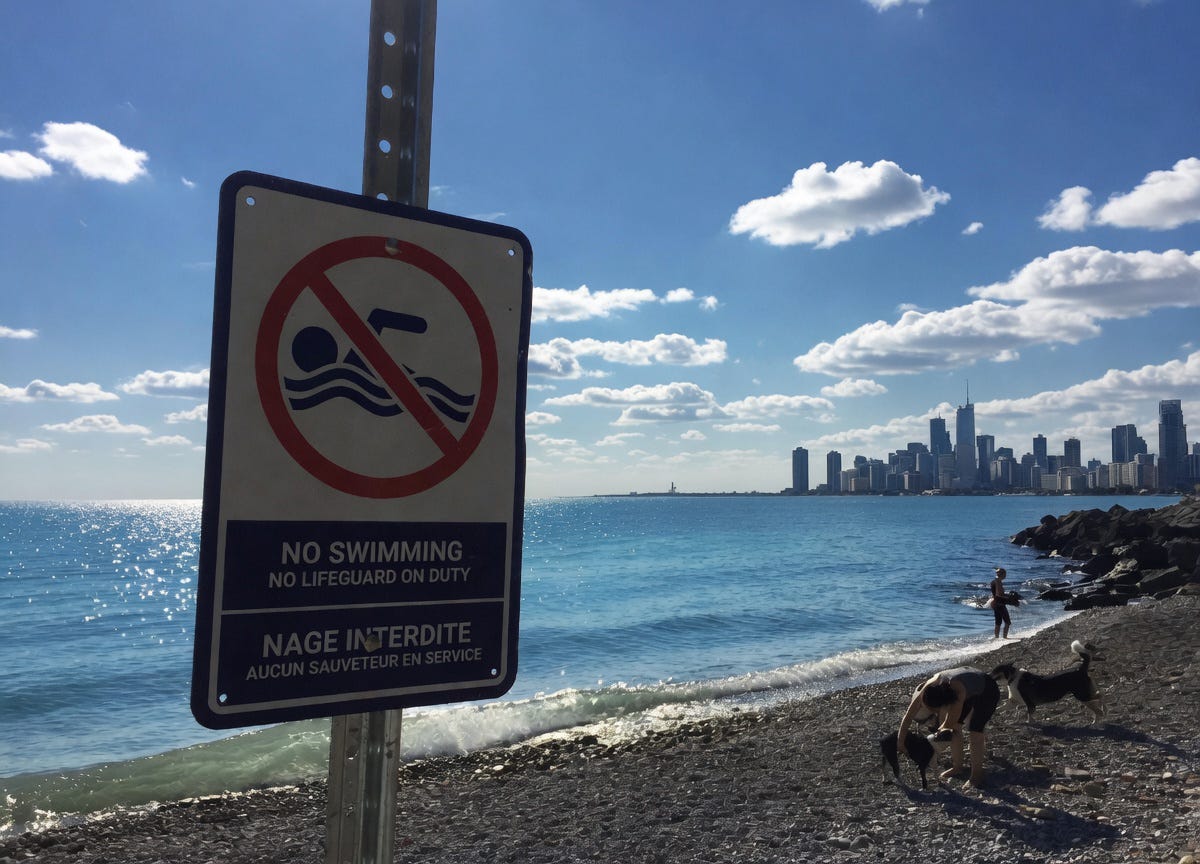
I’ve been at the water’s edge at Ontario Place by land and by boat, since 2018. It sits out in Lake Ontario, away from the shore and the sewage pipes and stormwater runoff, to the extent that it offers visitors a real connection with the water, wind and weather that few other places in Toronto can offer.
That’s when Swim Drink Fish started sampling the water there and found something remarkable: the southern waterfront had some of the cleanest water in Toronto on a day-to-day basis. Cleaner even than the island beaches. Unaffected by the city’s imperfect sewage system that overflows when it rains, it was and is a perfect site for a public swimming pier. The kind that could do for Toronto what the Gord Edgar Downie Pier did for Kingston. Connect a generation of kids who don’t have cottages to a freshwater lake that belongs to them.
When the chosen Ontario Place proposal came forward, I was relieved it had some silver linings. Not because I believed a private spa was the right vision for Ontario Place. But because it was the only proposal that included a public swimming pier, the first new swimming beach in Toronto in over fifty years. Also, it included some important partners like the local First Nations and artist organizations like TIFF. We supported and were prepared to work on the swimming pier with anyone interested in seeing it come to reality as a safe, fun and meaningful park to connect with Lake Ontario. That support was right.
What we didn’t see clearly enough was the frame we were operating inside. We arrived at a table where the terms had already been set, where the range of options had been narrowed before the public conversation began. We were so relieved that something good might happen that we didn’t push hard enough on the process that produced it. The pier was real. The constraints around it were real too. In retrospect, it’s not the swimming pier we question, it’s how we got there and what was lost in the process.
I don’t want to make that mistake again.
For most of its history, Toronto treated Lake Ontario as infrastructure. The harbour served industry, transport, and waste. The lake was essential and available.
That city has grown out of that space. Slowly, expensively and with genuine public commitment, Toronto has been reclaiming its relationship with the water. Billions invested in remediation, habitat restoration, sewage management, public access. A shoreline once closed by industry is reopening to people, to life, to the lake itself.
Something deeper is shifting too. Toronto sits at the heart of the Great Lakes basin, home to the largest freshwater ecosystem on earth. It is also home to Queen’s Park and the Premier of Ontario, the single most powerful political figure when it comes to protecting the Great Lakes, with responsibilities over drinking water that exceed those of any other public official, including in Ottawa, Washington, and Chicago. No city carries more responsibility for these waters. Toronto is learning that it is the freshwater capital of the world. And people are beginning to understand what that means.
Which is why the Billy Bishop expansion proposal has run into something its proponents didn’t fully anticipate: a city that no longer sees its harbour as available.
A runway pushing 900 metres of new land into Lake Ontario. Four to five billion dollars over twenty-five years for an airport that doubles or triples aircraft movements in a confined harbour already bounded by recovery and reinvestment. These numbers landed differently than expected. Not just because economists are questioning whether they hold. But because people recognized immediately that this wasn’t a transportation debate.
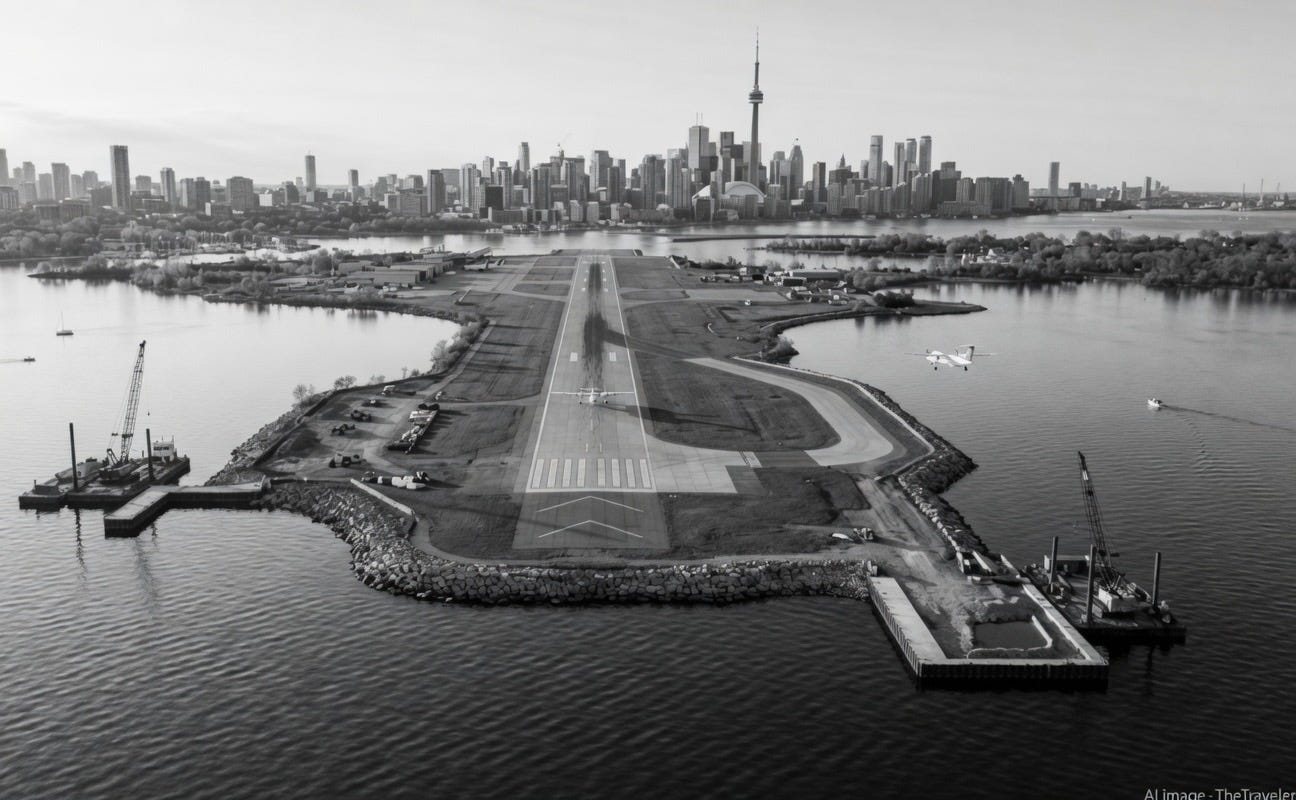
It was a waterfront debate.
Once shorelines are altered, once lakebed is filled, once infrastructure is fixed, these decisions don’t expire. They become the new baseline. Future choices are made in their shadow.
That permanence changes the standard.
When I look at any proposal touching our freshwater in the Great Lakes, five questions matter: Does it address the legacy of past pollution? Does it reduce sewage entering the lake? Does it restore habitat? Does it expand genuine public access to the shoreline? And does it treat the lake as something held in trust, a relation, not a resource?
A sixth question has emerged from the Biinaagami project and it is just as important: what do First Nations think? Not as a procedural checkbox, but as a necessary condition for getting it right, legally, practically and in terms of our shared responsibility for these waters.
Those aren’t rhetorical questions. They are a standard. And they’re useful precisely because they shift the frame from the project to the place.
A runway filling hundreds of metres of Lake Ontario, in the harbour of the city most responsible for the Great Lakes, fails that standard clearly. It moves in the wrong direction at exactly the moment the direction finally matters.
There’s a kind of courage this moment requires, not the kind that announces itself, but the quieter kind. The kind that shows up when it’s easier not to. When competing pressures are real. When the gap between knowing what’s right and actually doing it feels wide.
Environmental decisions are usually made in that gap.
When consequences are gradual or dispersed, it’s easier to defer. To assume impacts can be managed. To move forward without resolving the larger question. That is how waterfronts get lost; not dramatically, but incrementally, one reasonable-sounding compromise at a time.
Toronto has spent decades clawing its way back from that pattern. The July 24 federal deadline for public comment on Toronto’s waterfront is not a procedural formality. It is a test of whether the city, the largest in Canada, a Great Lakes capital, can speak clearly, when it matters, before the concrete is poured.
The work is to use this moment well.
Submit your comments before July 24 at:
All small ships turn back.
Thanks for shining a light on this ill-thought out expansion project Mark. I am confident that the people of Toronto who live in around this area take notice and use all channels to take it back to the drawing board or shelf it. It simply makes no sense to expand this airport that is literally on top of so many neighborhoods when we have a huge international airport a few kms away on the edge of the city where pretty much all airports are optimally located. That waterfront needs to be restored and used in ways that benefit the cities residents with more places to recreate, hang out, stare at the waves and go for swim or sail or cast a line in. Not to watch a jet land from afar.
Great essay- agreed ! But fyi the link to the survey doesn't work. Tried twice.... I have already done the survey from elsewhere. 👍