
It might not interest everyone at first glance, writing about this new Canada Ontario Agreement. But it should. On all sides of the border, across the lakes and throughout the watershed. This agreement will set the tone for the next 5 years of water quality for 20% of the planet's surface fresh water and set the direction for the future health or demise of our most important natural asset. Water is at the heart of our health, economy and overall prosperity. It is the foundation of our cities and our agriculture. It demands our attention and should direct our politicians.
On July 24th, the federal government sent the Great Lakes community a clear message: the Toronto waterfront is not a place to dump more fill and call it progress. You cannot point to a century of contamination and use it as the excuse to pour more concrete into the busiest harbour on the Great Lakes. Eighty-seven thousand people wrote in during the public comment period and for once, a government actually listened. Two days later Toronto gathered to celebrate on the waterfront. But celebration might be short lived as we are just at the beginning of the challenge.
This year is a moment for getting to the hard work of the Canada-Ontario Agreement on Great Lakes Water Quality and Ecosystem Health. This is an agreement that governs how the two governments protect the Great Lakes and St. Lawrence River. It is being renegotiated based on 9 previous agreements that have come before it since 1971. It would be easy, as has happened before, to take COA 9, change the date, refresh the annexes and call it COA 10.
I don't think that works this time. The watershed has too little left to give and our commitment to restoration is long overdue.
The Billy Bishop fight was supposed to be about just a little more lake fill as a spark for more jobs and more convenient flights for travellers. But in the end it became about a harbour with a century of waste and raw sewage that was working towards restoration in our lifetime and would not be up ended by political direction. The community desire for clean water needs to be fed, again and again, to realize the goal of swimmable drinkable fishable harbours.
Canada still has Areas of Concern it promised decades ago to fix. Restoration of Randle Reef in Hamilton Harbour has been underway for so long, it's easy to forget it was just the beginning of the job of restoring the harbour. Toronto Harbour still fills with sewage debris after every hard rain. Port Hope is still managing low-level radioactive waste from the Eldorado Nuclear and Cameco uranium refining process and is nowhere close to finishing the job. There are a total of 43 areas of concern in our two countries with 12 in Canada, 26 in US and 5 that share a border. And these are just the worst areas, many other cities and communities have well known pollution problems that were to be on the next list after these were cleaned up.
Today, it is becoming clearer that a community that has lived next to a contaminated harbour for generations doesn't want another progress report. It wants a date it can hold the government to finish the job. Delisting these sites is economic development for the towns and neighbourhoods that have carried the cost of that pollution the longest.
None of that happens without money attached to it. Every COA before this one made big commitments and left the funding vague and that gap is exactly where people stopped believing in what the agreement promised. If Ottawa and Queen's Park want this one to be different, it has to name dollar figures, name years and name who answers if the work doesn't get done.
There's a binational reason to get this right. COA exists to carry out Canada's obligations under the Great Lakes Water Quality Agreement with the United States. At a moment when the relationship with Washington is harder than it's been in a long time, a funded, credible commitment on our own side of the border is leverage. A country that can’t meet its obligations on the Great Lakes doesn't have much standing with our partners to the south.
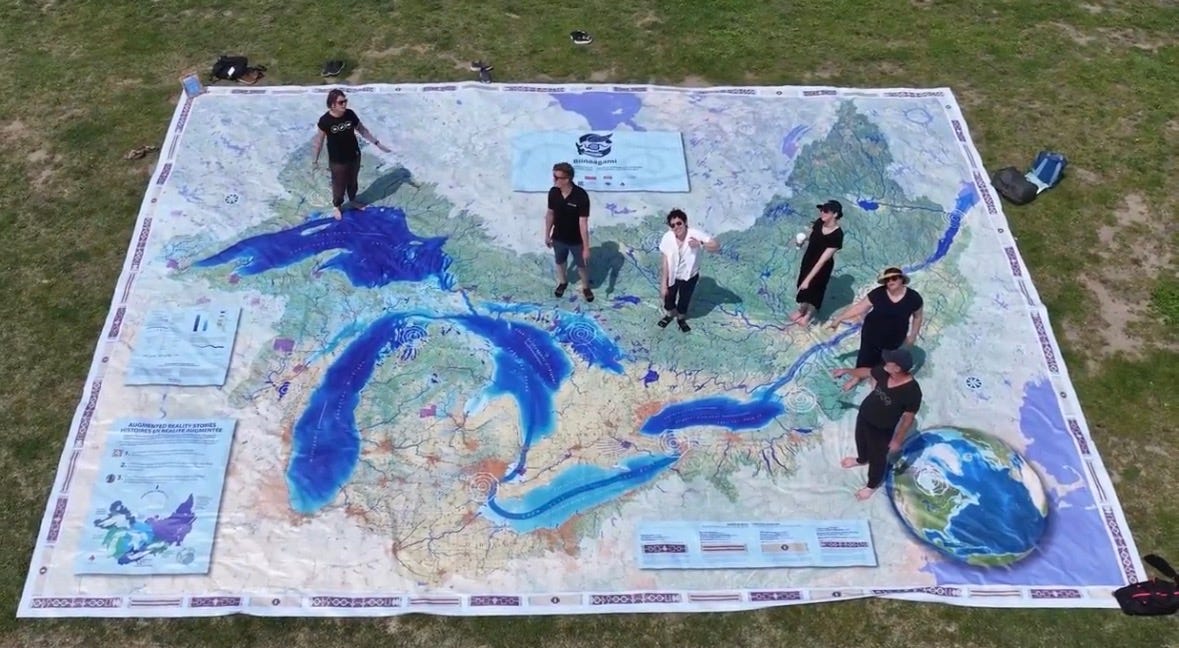
Through Biinaagami, working with Canadian Geographic and a Shared Circle of Indigenous Knowledge Keepers, I've watched how differently this watershed appears to the 40 million people who live here once you stop treating water as something to manage and start treating it as a relationship. COA 10 needs that shift built into its structure, not added as language after the fact. Indigenous nations hold jurisdiction and knowledge this agreement depends on and that needs to shape COA 10 from the first draft, not get folded in after the two governments have already decided on the terms.
I'll say the part I wouldn’t put in the formal submission, because it's true and somebody should say it. Queen's Park is likely very unhappy right now, at ENGOs, at the federal Great Lakes program, at the sense that environmental advocacy just cost it a project it wanted. But the plan to use a special economic zone to ram the project through was a bad one. An SEZ would have handed the project immunity from the regulations and public process meant to protect people and the environment. No one should be angry that the public was heard and hopefully this won't carry into the room during this negotiation. Important, critical, funded and significant improvements to Great Lakes harbours and Areas of Concern are the stuff both governments must work towards.
The greatest threat to the COA may be that we get an agreement where a little money is doled out to nice ideas and good people but doesn't stop sewage overflows or pull heavy metals out of a riverbed. This agreement needs dates and dollar figures attached, not another round of good intentions. It will take partners and communities and yes, even engineers, not just a few environmental organizations, doing the work and building the clean infrastructure.
Long before the group I founded, Lake Ontario Waterkeeper, had a name, the Canada-Ontario Agreement was one tool we had to hold both governments to their word. That hasn't changed. What's changed is that this week, tens of thousands of people just showed both governments they're paying attention. COA 10 is where we find out if either one was listening.
How to get involved
The next Canada-Ontario Agreement is being negotiated right now and both secretariats want to hear from communities and organizations who use these waters. Not just after a draft is released, but while it's still being written. If you want to weigh in on what COA 10 should commit to, reach out directly:
Federal Secretariat: Carla Torchia, Canada Water Agency — Carla.Torchia@cwa-aec.gc.ca
Provincial Secretariat: Carolyn O'Neill, Ministry of the Environment, Conservation and Parks — GLO@ontario.ca
An excellent backgrounder and call to action, Mark.
Parts of your narrative remind me of the Detroit River on the U.S. side. The river is an Area of Concern that contains 3.5M cubic yards of toxic sentiment that remain from the peak industrial era of the 1950’s. While there’s been habitat restoration, there’s no viable remediation plan. And chemical discharge to the river near Wyandotte continues. .
Keep us posted on COA..
~ g